As design lead, I shaped the product strategy, research and design of the first TV app for BBC Sounds, the BBC's home for live radio, music and podcasts.
I managed a team of three designers, I steered the product away from a dated template and used research to decide what launched first.
COMPANY
BBC, the world's largest public service broadcaster
MY ROLE
Senior UX Designer
GOAL
Increase availability (primary)
Increase reach and consumption (secondary)
1 hour+
avg. listening session
100k
weekly users by April 2020
9M+
with access to the app at rollout
The Problem
BBC Sounds was a young product that needed to grow its reach, and people were already listening to audio on their TVs.
The goal was to get the app onto as many TVs as possible. The challenge was designing an audio app for a screen built for video, used with a remote from across the room.
Process
Research and discovery. I led user interviews with people who already listened to audio on their TV, and brought product and engineering along to hear users first-hand.
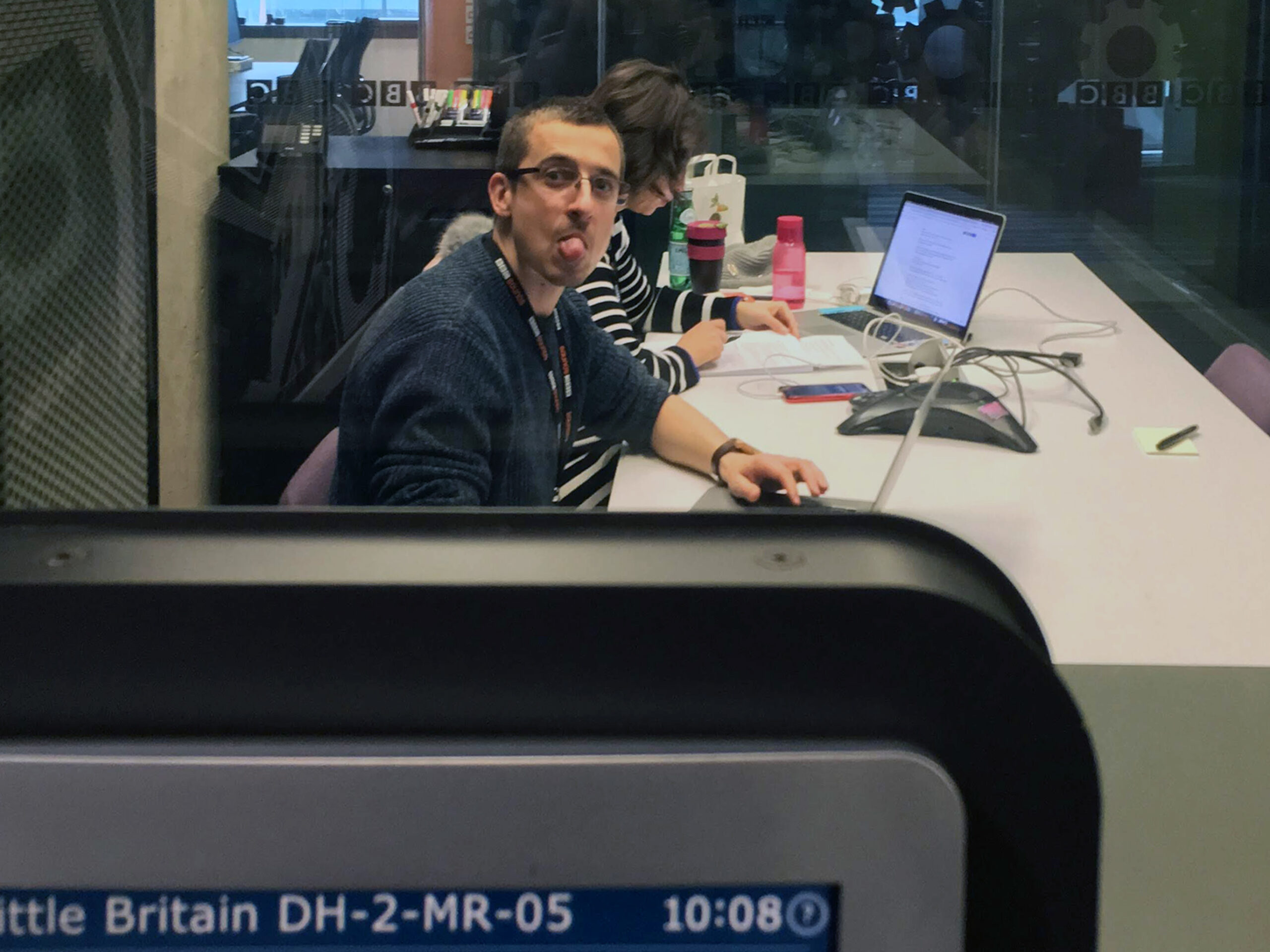
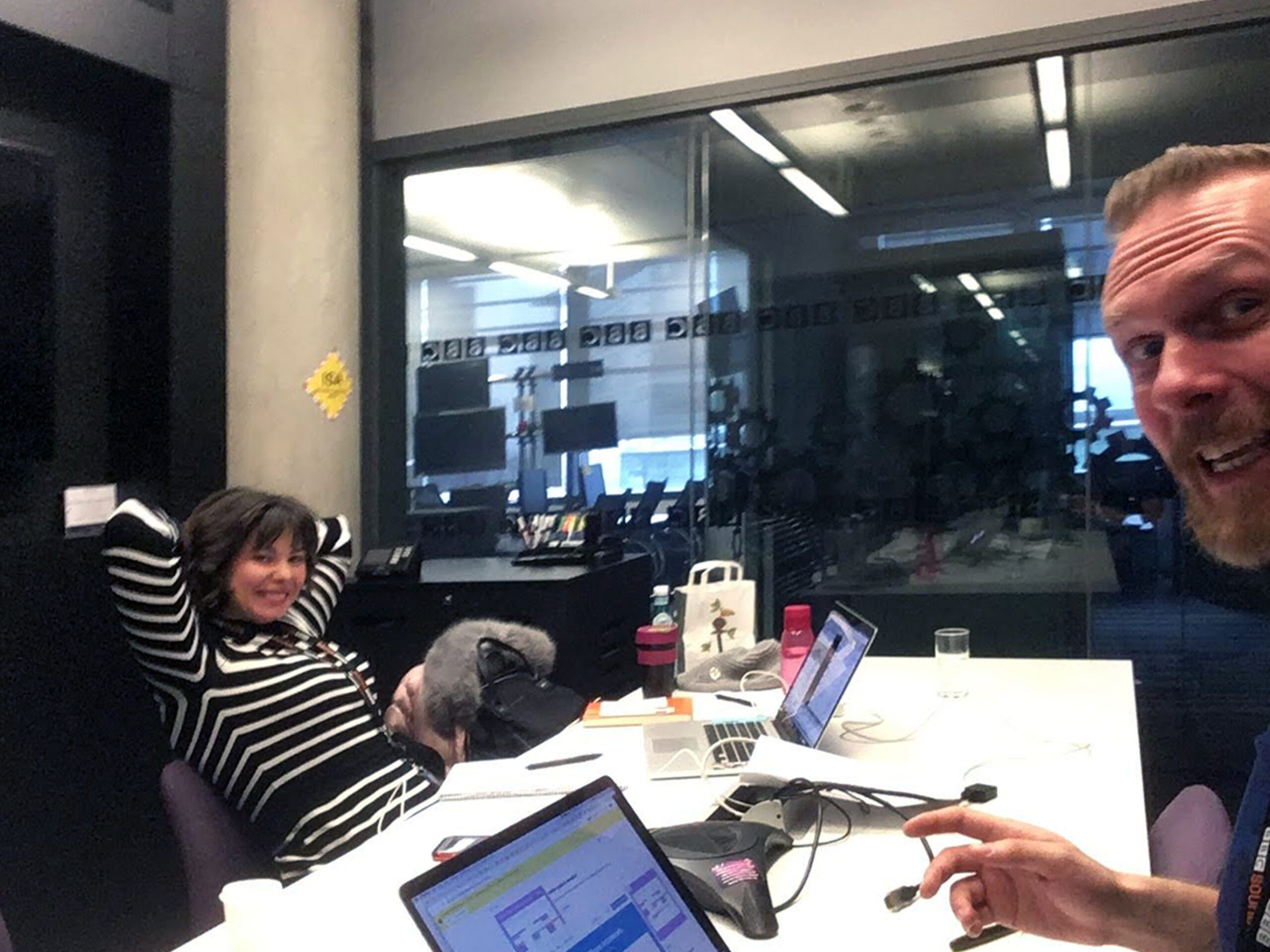
The whole project team took part in the interviews, meaning everyone had a deep understanding of user needs
Research Themes
Reliable routine: Many people use TV audio as part of a regular routine to help them get ready to leave the house.
While you work: Listening is often in the background whilst other tasks are completed - e.g. housework, cooking, WFH.
Perfect for parties: The TV is often the best and loudest speaker in the room. It's also a focal point for groups.
People also wanted an app they'd be proud to show off in their living room, and were quick to dismiss ones that looked poor on a big screen.
Product strategy. To reduce cost, leadership wanted to reuse an existing BBC platform that was dated and text-based. The research pointed the other way, so I set a visual-first direction: artwork filling the screen, and only the features TV listeners need.
I made the case with the research, and leadership agreed. The product moved from a reused template to a premium, immersive experience.
Prioritisation. I used the research to recommend the launch scope to the PM. Live radio would be used most, so it launched first.
Personalisation, such as bookmarks and saved items, would only be used by a small share of people, so we held it back for later releases and kept the first release focused.
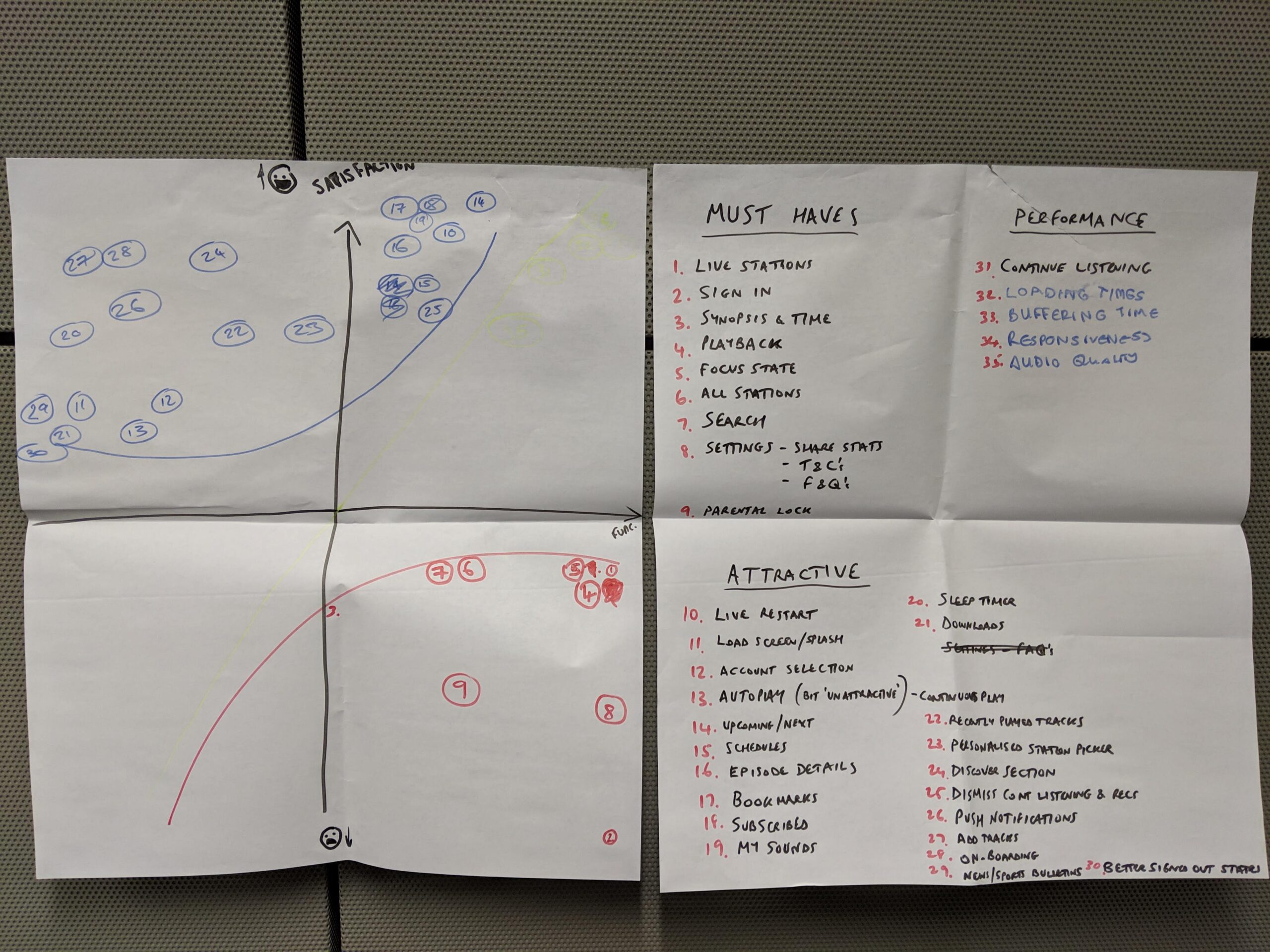
Prioritisation using Kano model analysis
Design direction. To cut the clicks to content with a remote, I tested new navigation patterns against familiar content rails. Users found the rails more intuitive, so that's what we shipped.
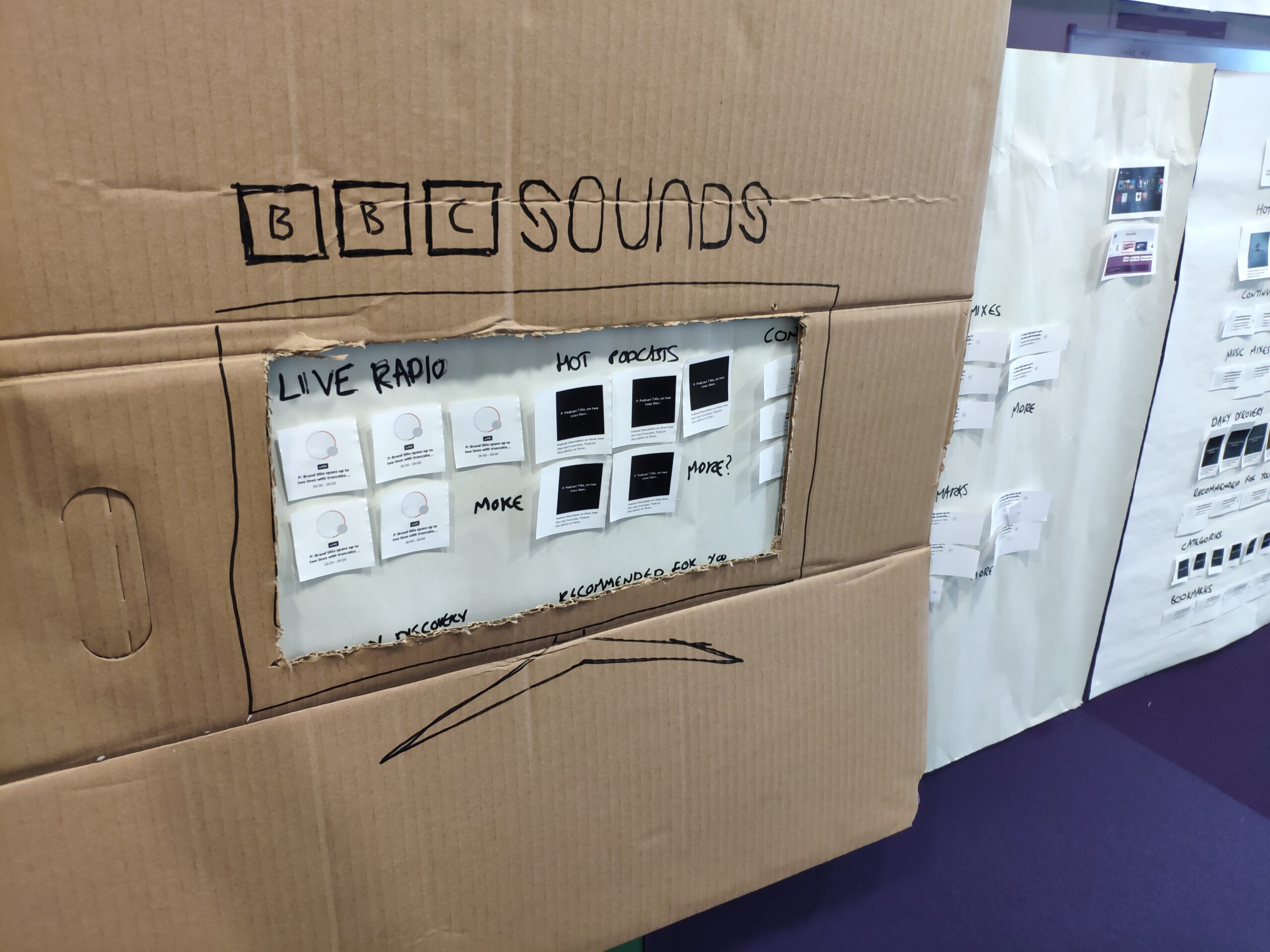
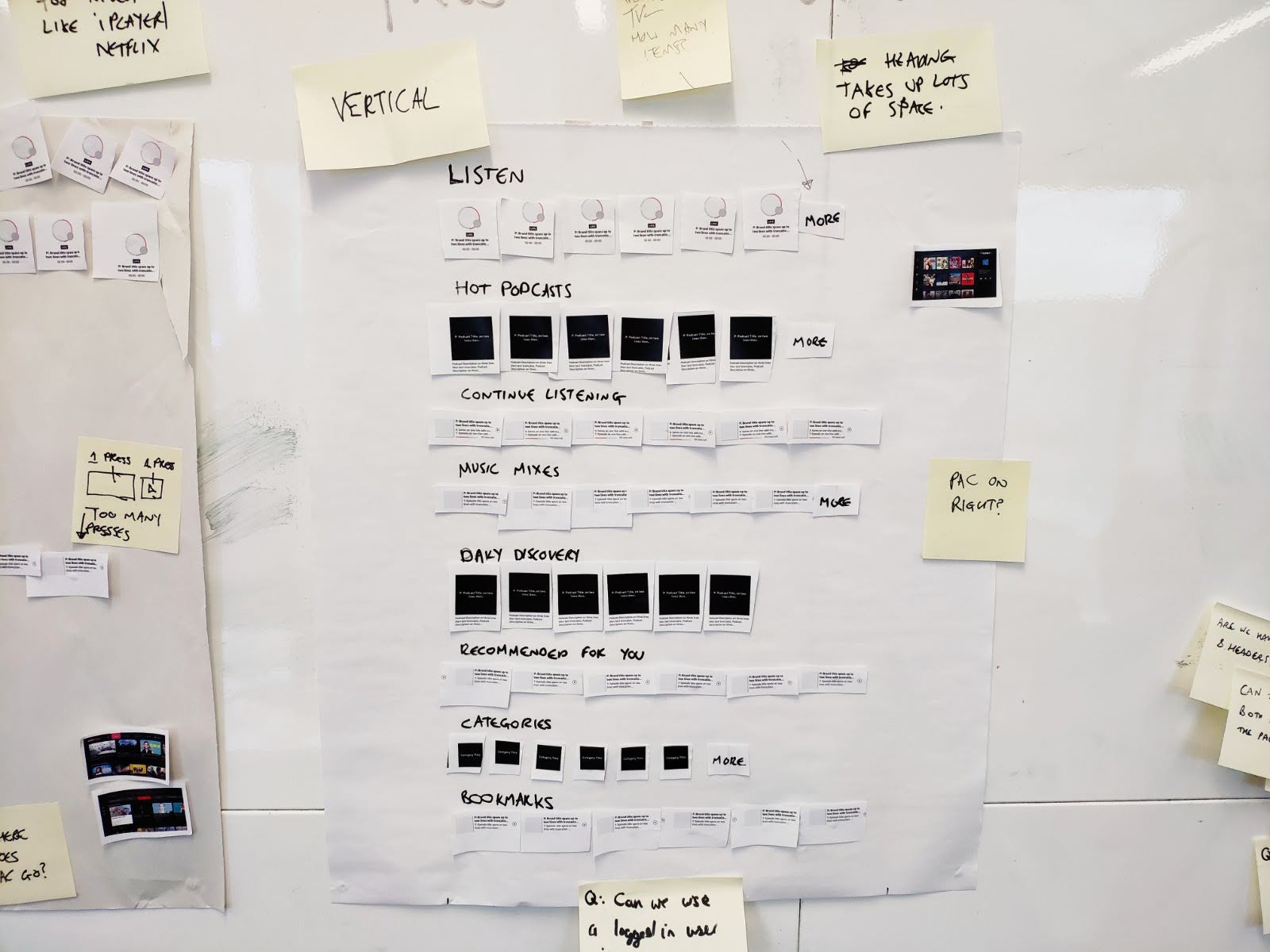
Lo-fi testing of navigation patterns
Leadership and delivery. I managed a mid-weight designer and two graduate designers, working with product and engineering in small cross-discipline teams. We tested in the BBC's usability lab, set up like a living room, and reviewed builds on real TVs with testers and developers.
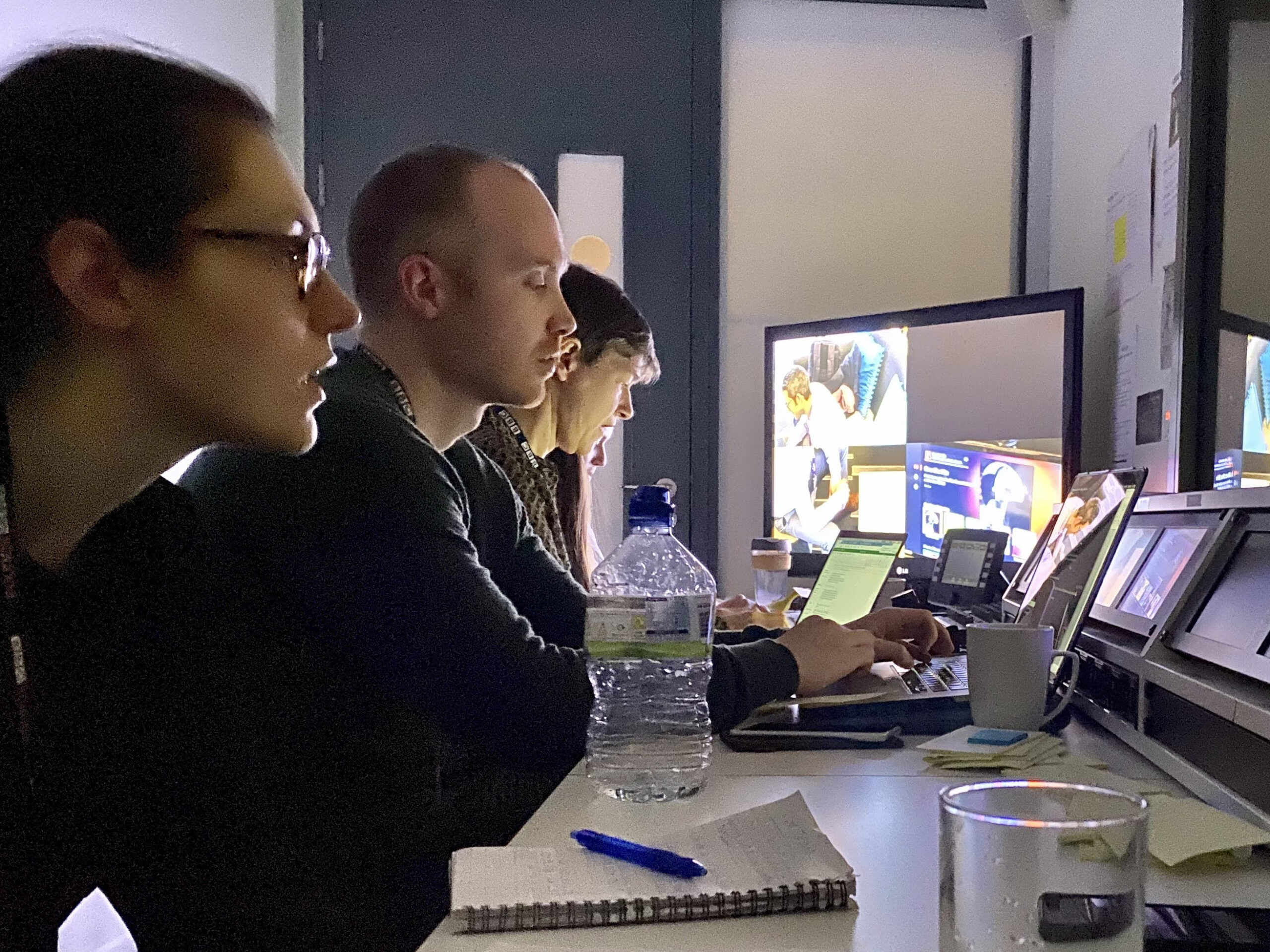
The observation and synthesis process

Solution
We launched on Roku, Samsung, LG and Amazon Fire TV with three standout features:
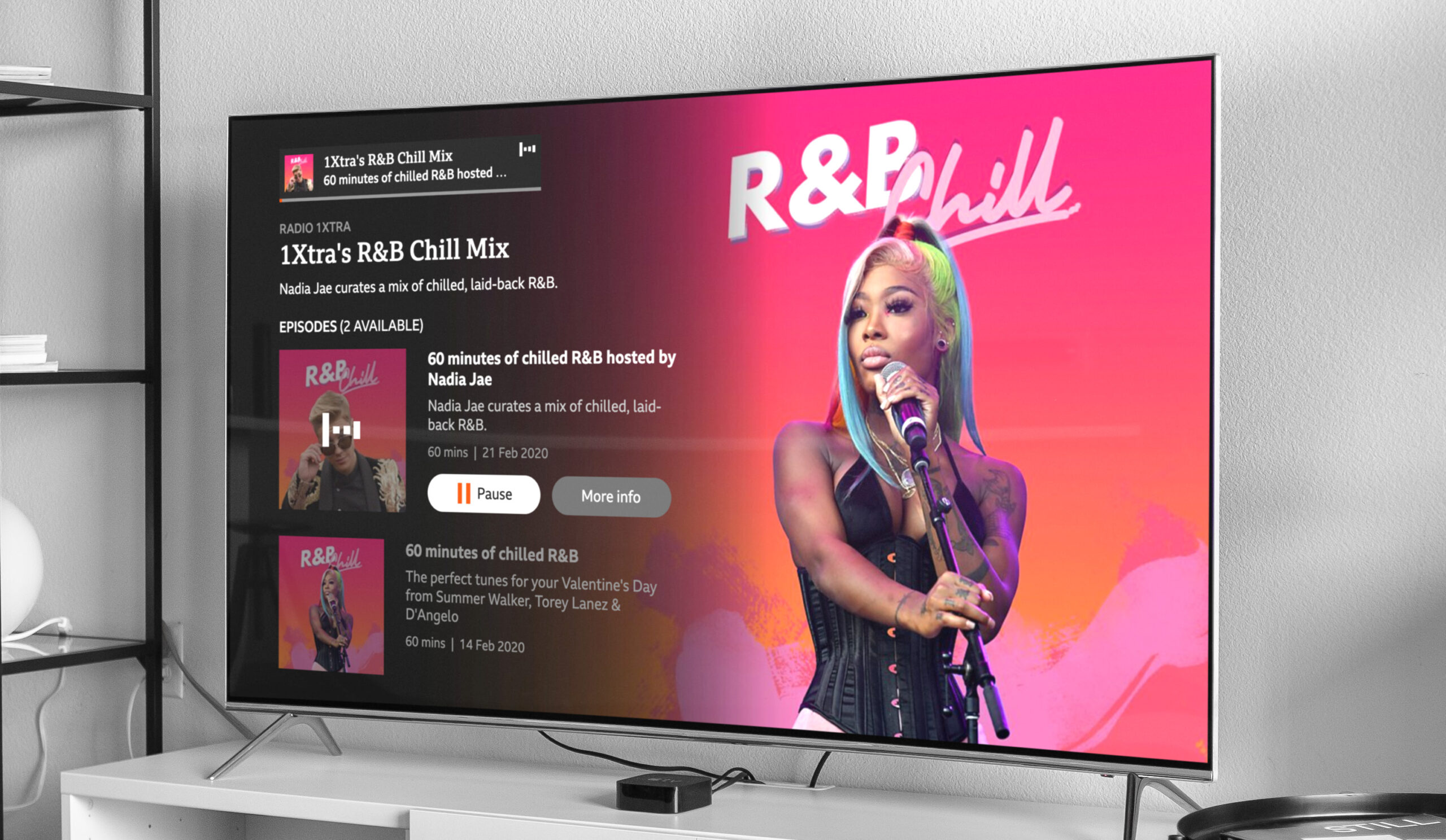
Immersive playback: artwork fills the screen, with key information and instant controls. I set the brief, and a designer on my team cracked it.
Persistent audio controller: research showed people glance at the TV mainly to see what's playing, so track details stay on screen throughout the app.
Screensaver: people worried about screen burn-in, so track information drifts slowly across a black screen. It became one of the most talked-about features at launch.
Results
- 1 hour+ average listening session: lean-back listening, just as the research predicted
- 100k weekly users by April 2020, a month after launch
- 50% of the UK smart TV market: around 9 to 10 million homes with access to the app at rollout
- Data-led roadmap: usage showed music outperformed podcasts, so the PM and I built the next roadmap around it
Credits
UX
Tom Killeen
Matt Bevan
Selena Whitehead
Product
Elisa Erriquez
Abby O'Brien
Engineering
Nick Goward
Mamatha Nair
James Garty
Ryan Waudby
Krishnan Sambasivan