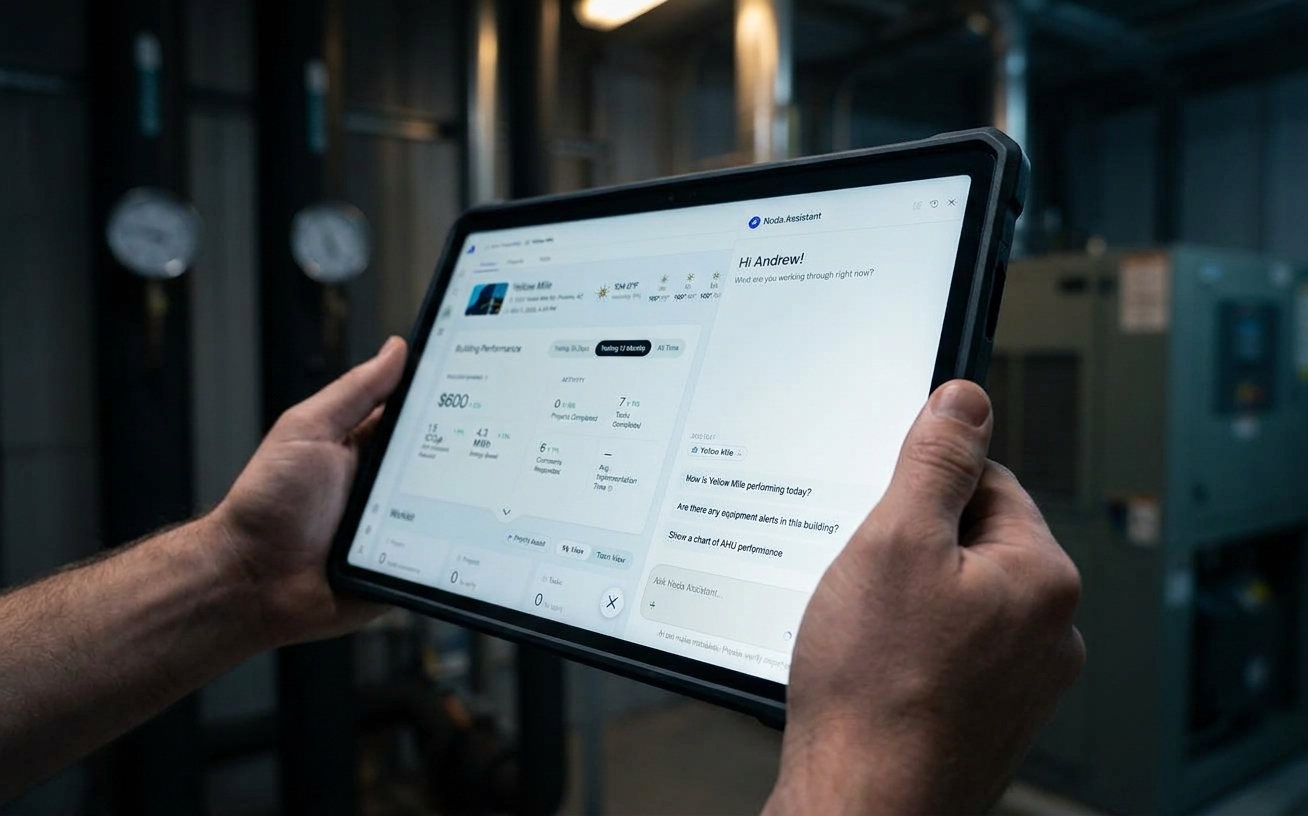
Leading the end-to-end design of Noda's AI assistant - a conversational surface that empowers action
Business goal
To remove the bottleneck of manual platform investigation by building engineers through a market-defining, conversational AI interface.
Responsibilities
- User research and discovery
- AI principles
- Solution design
- Rapid code-based prototyping
DELIVERABLES
Conversational AI Interface
SUCCESS METRIC
Sales & GTM Momentum - Priming the product for a successful market rollout with strong sales and community response.
Active Engagement - Retaining and engaging users by bridging the gap from detection to instant resolution.
TIMELINE
2026
The LLM powered prototype
The Opportunity
Noda's existing platform houses vast amounts of intelligence and operational data, but users have historically been forced to manually hunt for it across fragmented dashboards and modules.
The project originally sparked from a future planning workshop where my team identified the need to transition our platform toward agentic workflows.
Once my workstream was assigned the project, the vision was clear: build an intelligent assistant plugged deeply into platform data and agents - that acts as a true co-worker to give meaningful answers and take direct action.
Benchmarking
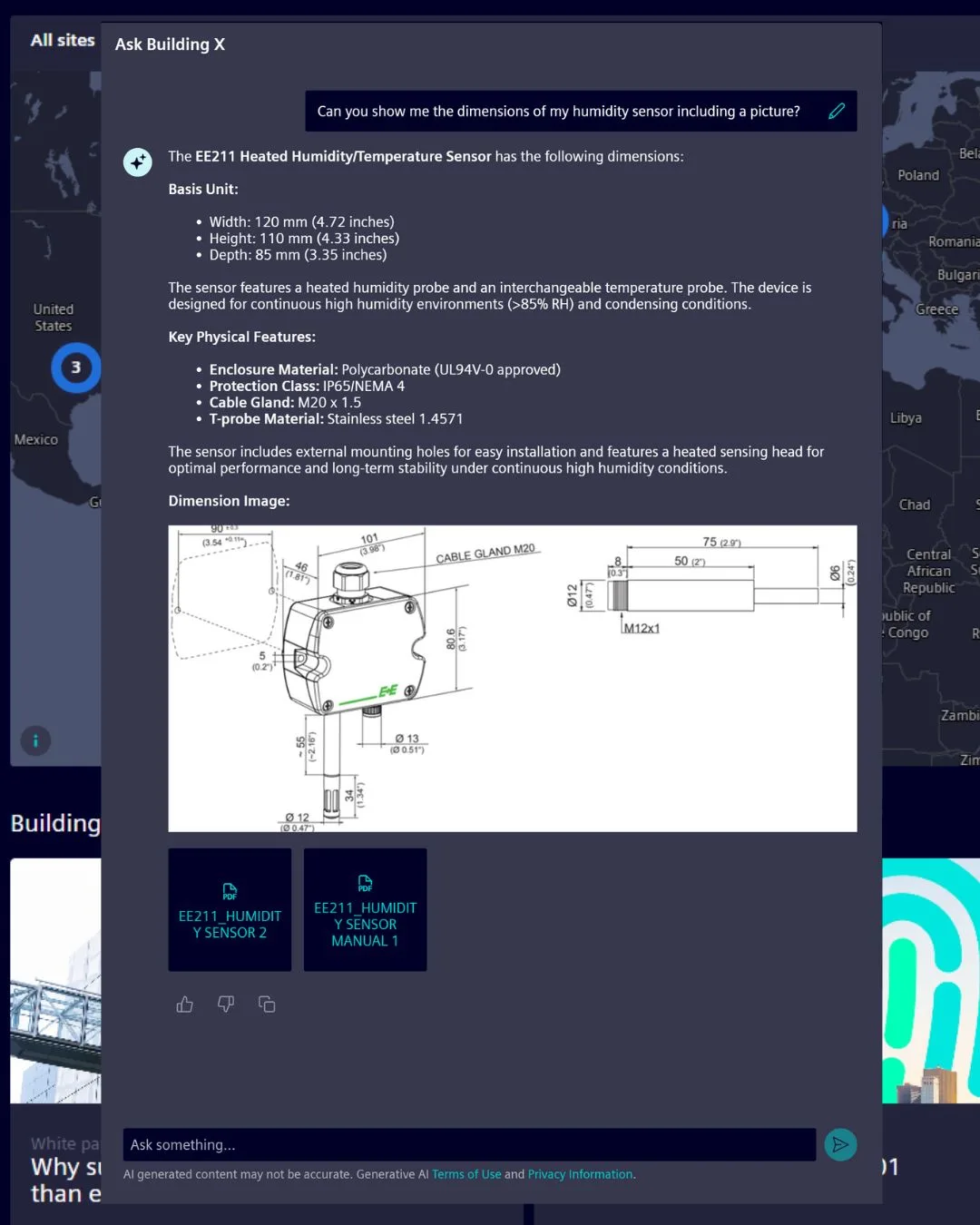
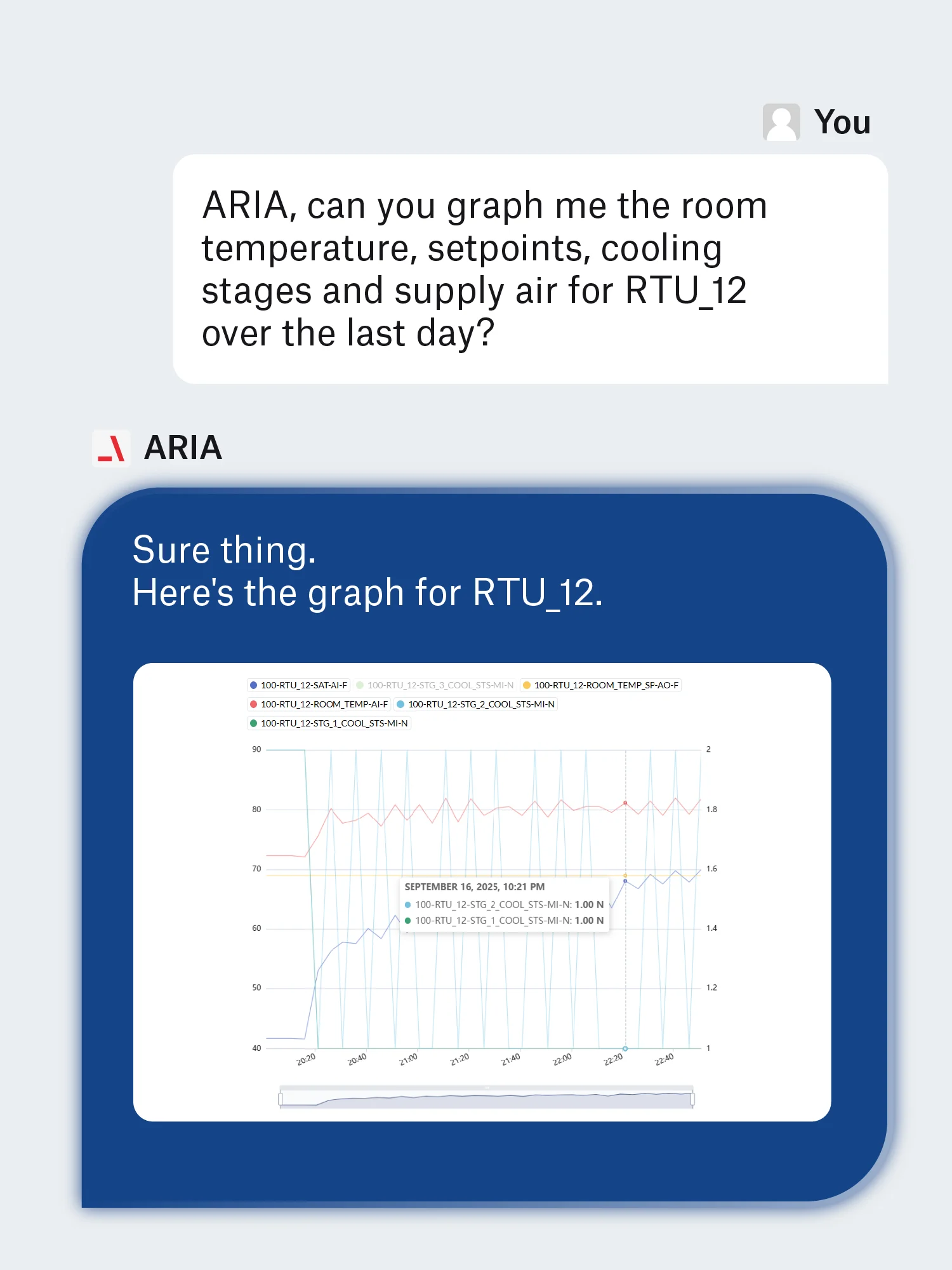
The Limitations of Competitors
When auditing direct competitors in the enterprise and B2B SaaS space, their chat implementations were severely lacking:
- Context Switching: Chat windows typically functioned as disruptive overlays that completely blocked the underlying workspace, forcing users to toggle back and forth.
- State Resets: Conversations lacked continuity across pages, meaning users could not continue journeys across the platform.
- Limited Functionality: They were restricted to basic, text-only Q&A wrappers that couldn't interact with or generate real artefacts within the platform.
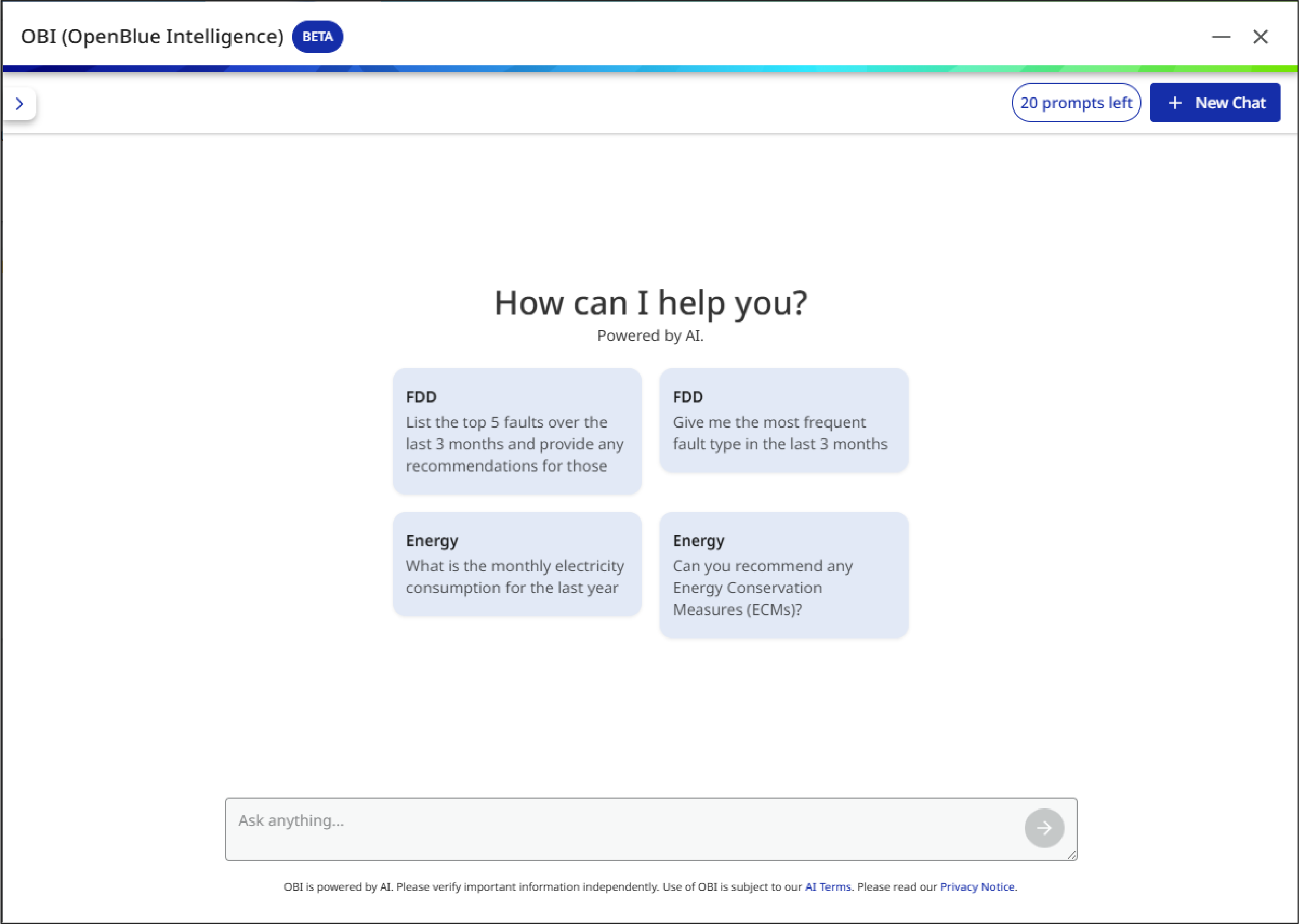
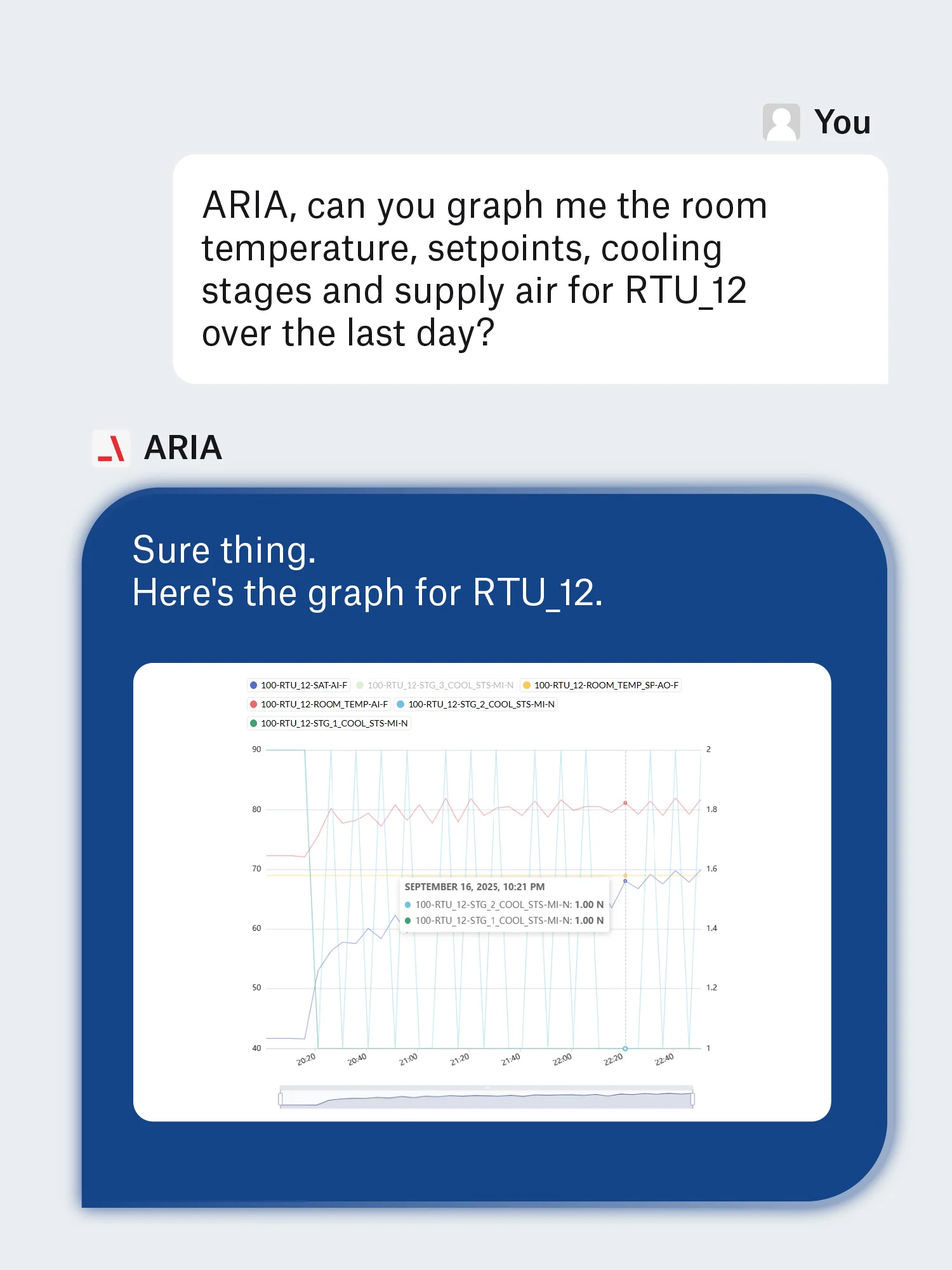
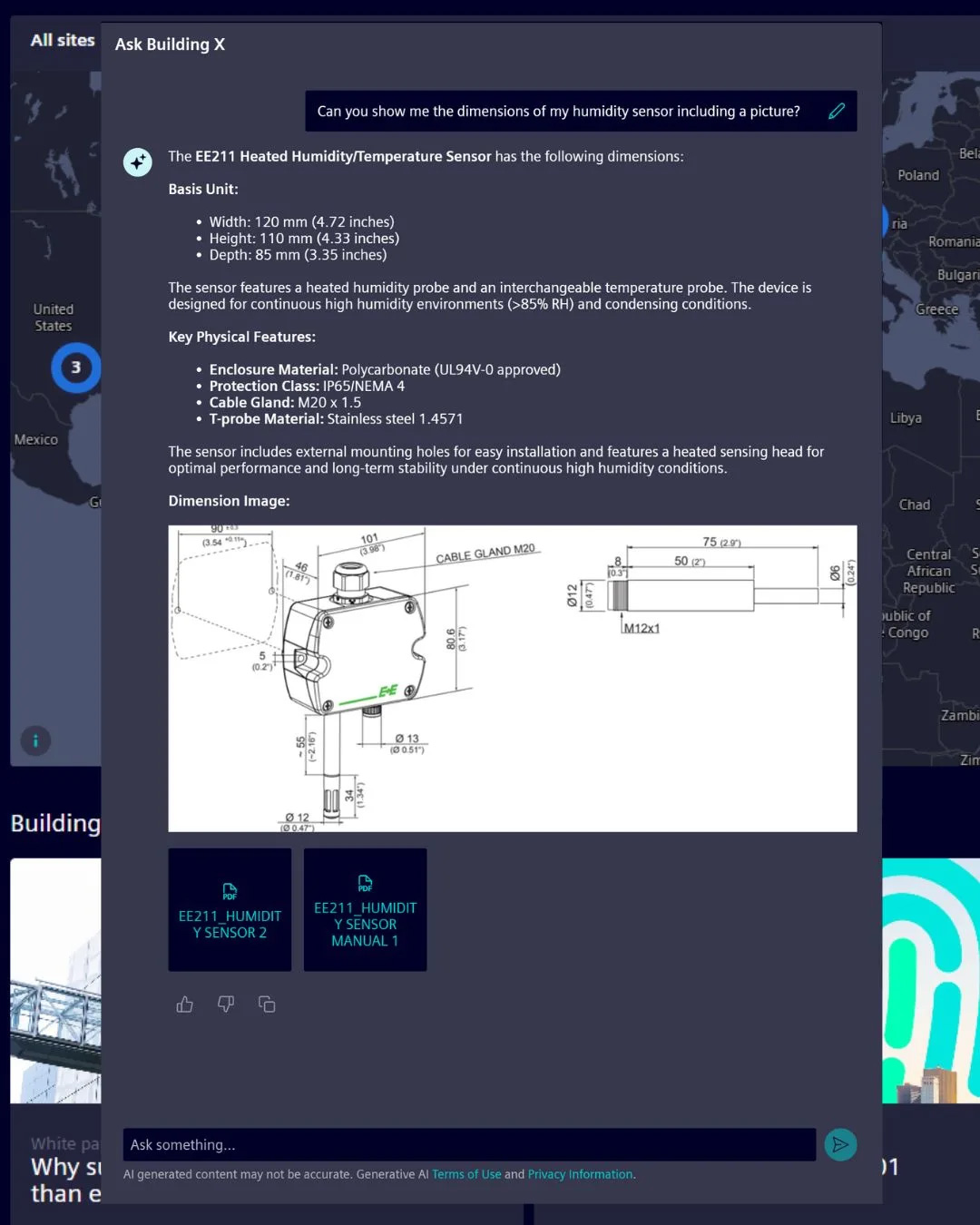
The limited maturity of competitor's offerings
Inspiration from World-Class Conversational Tools
To ensure Noda Assistant didn't feel like a basic wrapper, I took inspiration from state-of-the-art conversational products. Key takeaways:
- Perceived Performance & Trust: Interactions need to be engineered to make response wait times feel negligible. Micro-interaction patterns from indutry leaders can be used to create immediate familiarity and trust in AI outputs.
- Advanced Agency: Value can be added by moving beyond passive text and introducing agentic artefacts - such as generating dynamic charts and reports directly within the platform.
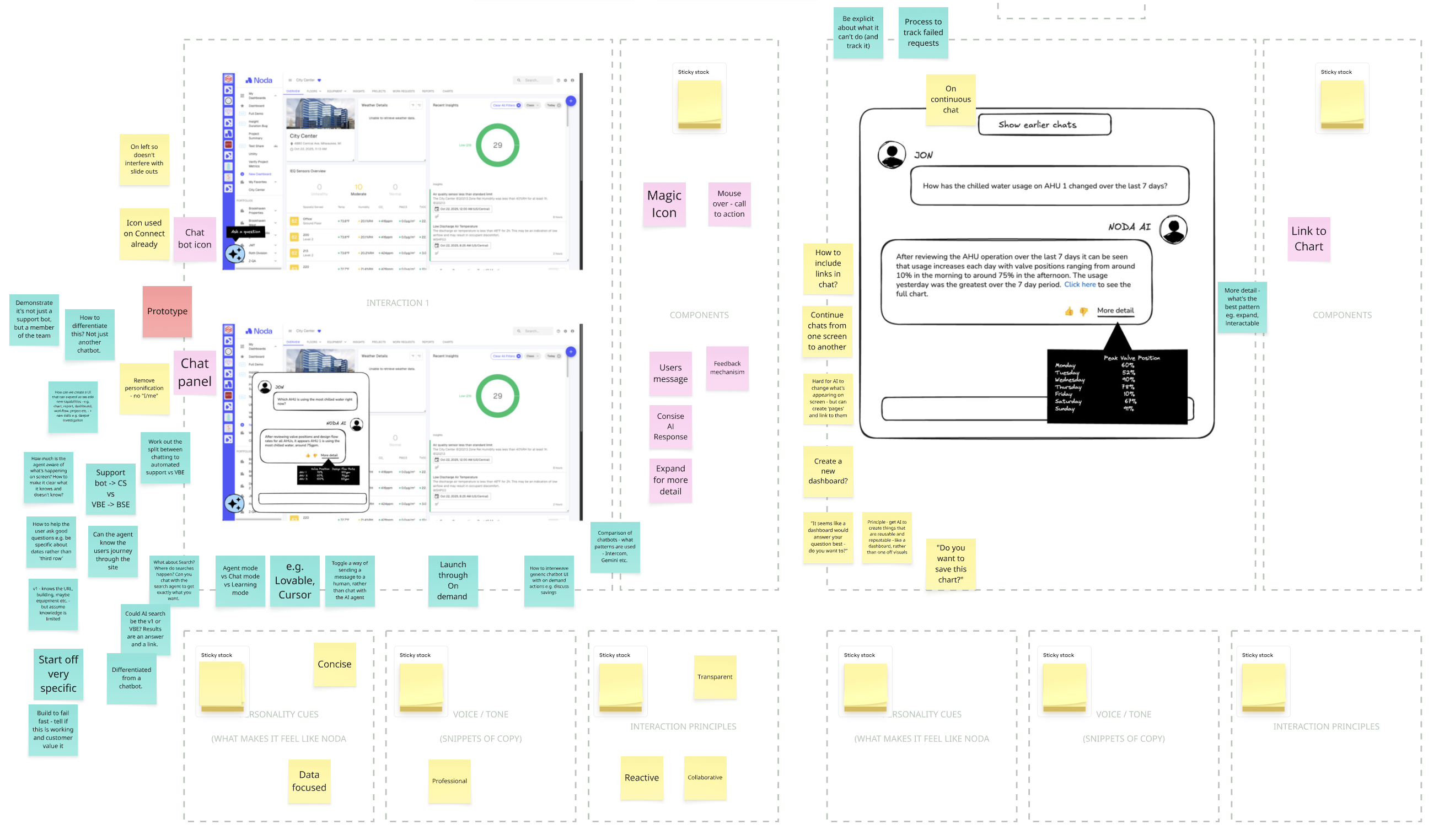
A workshop focussed on developing new functionality
Customer Discovery
While the data and engineering teams tested the technical feasiblity of the platform's underlying models, I took ownership of running the customer research interviews to rigorously test the desirability and human response to AI autonomy.
Uncovering User Skepticism
The research surfaced critical insights regarding enterprise adoption and trust:
- The Demand for Absolute Honesty: Users were deeply concerned with accuracy and trustworthiness - making it vital that the assistant never overpromised, remained completely honest about its limitations, and avoided black-box opacity.
- Traceability and Source Visibility: Building engineers wanted to understand precisely where data and decisions were coming from. The system had to be capable of supplying transparent reasoning traces and sourcing links.
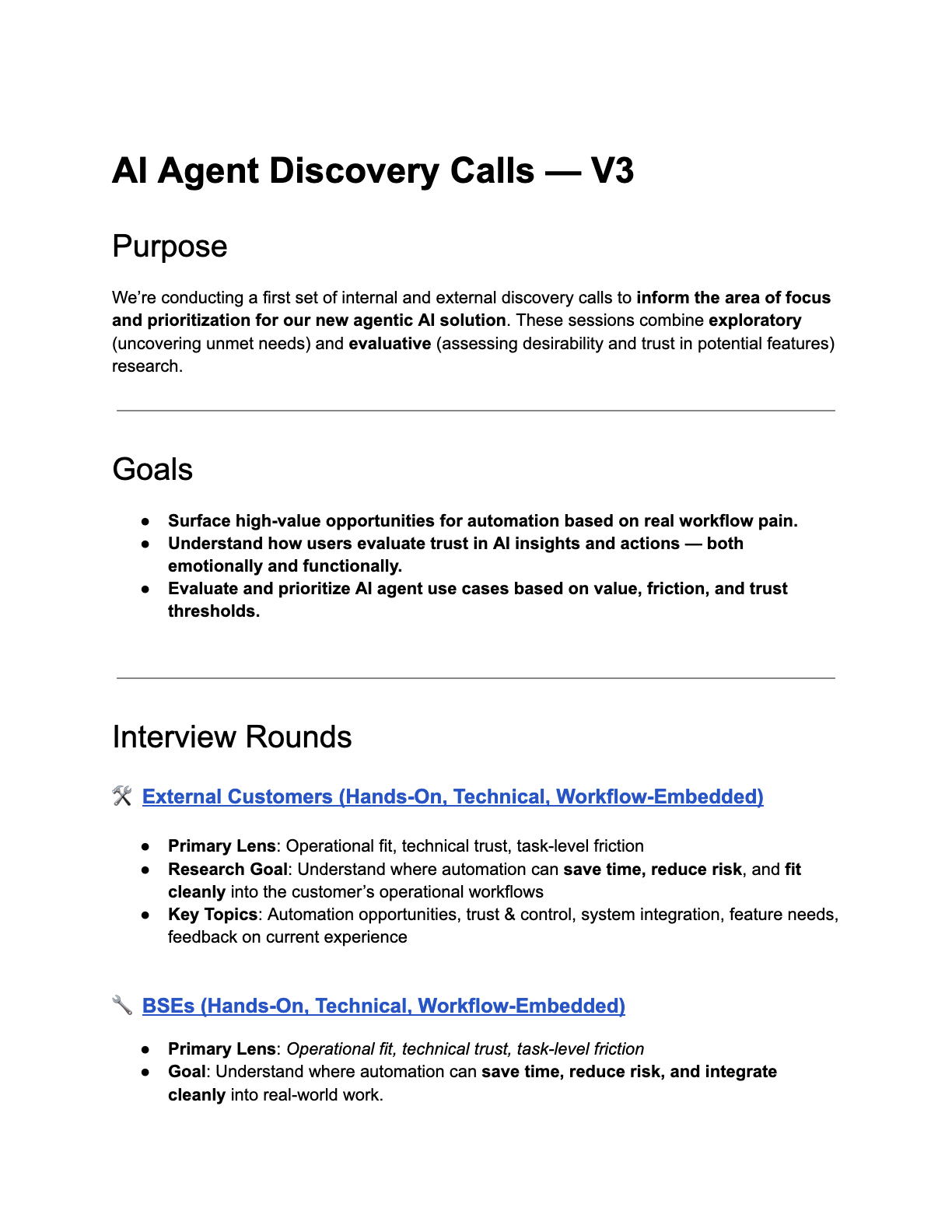
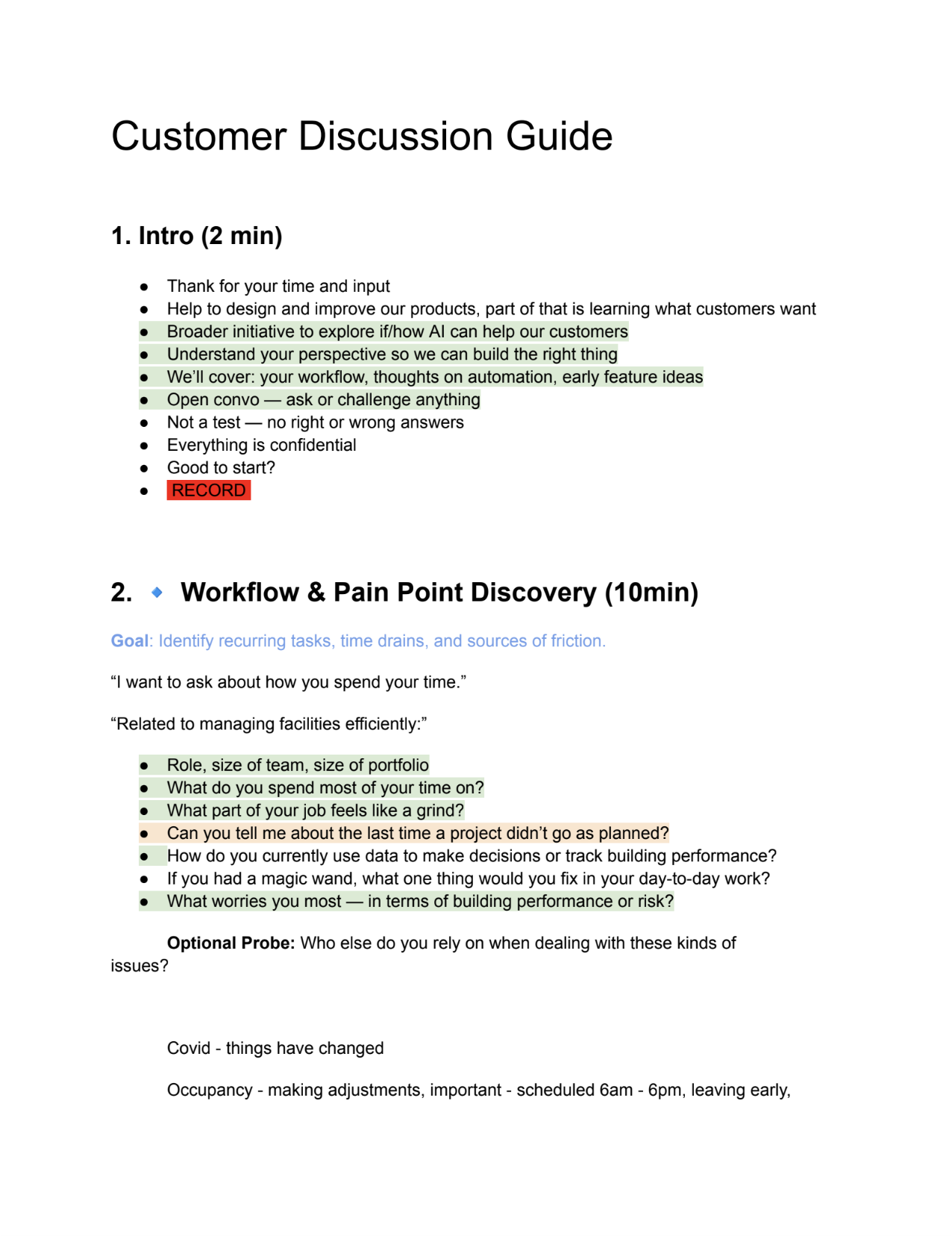
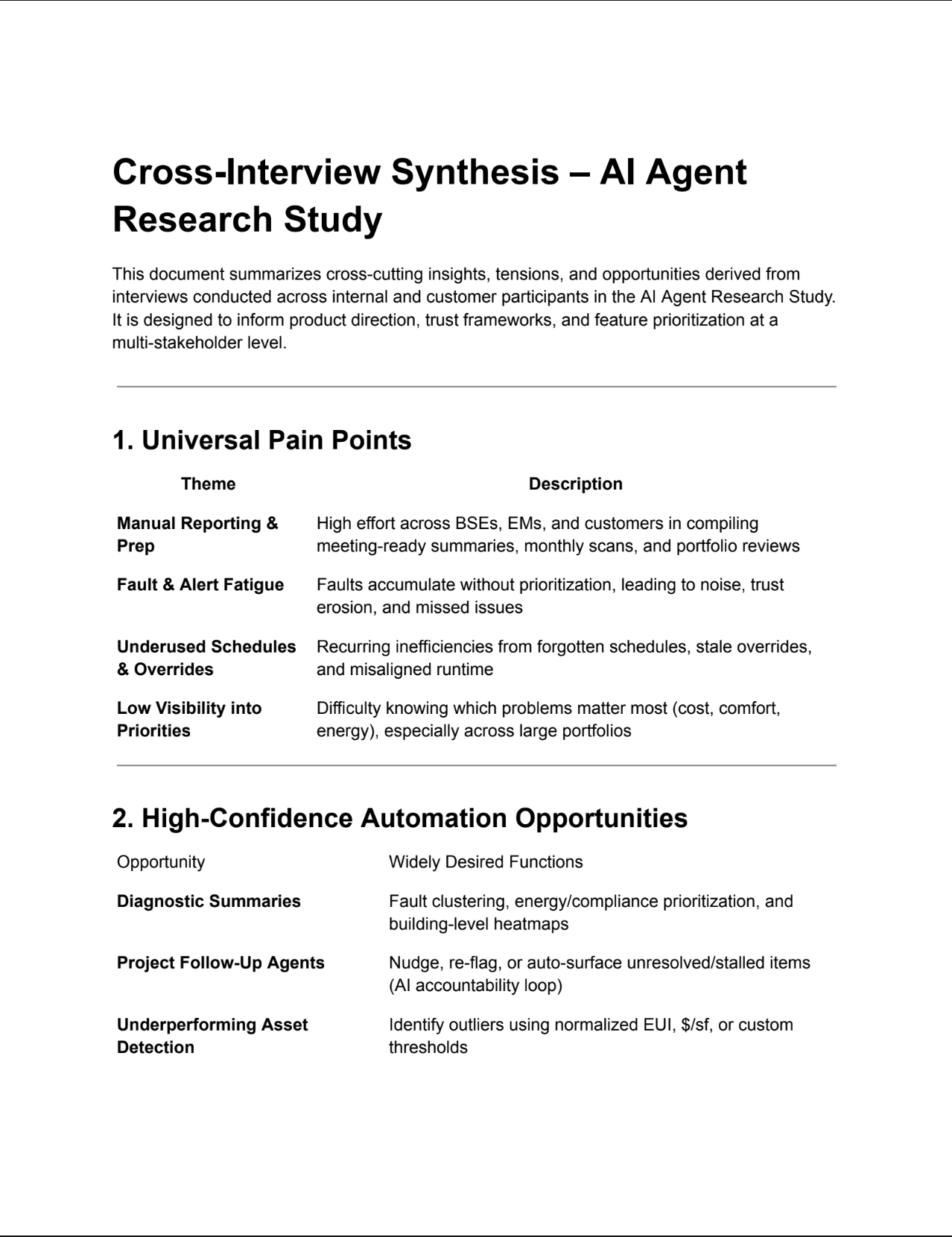
Research documentation
The Design Implication
This research fundamentally shaped our product strategy. We realized the interface had to work exceptionally hard to build trust, keep the user completely in control of every action, and provide clear visibility into its underlying data sources.
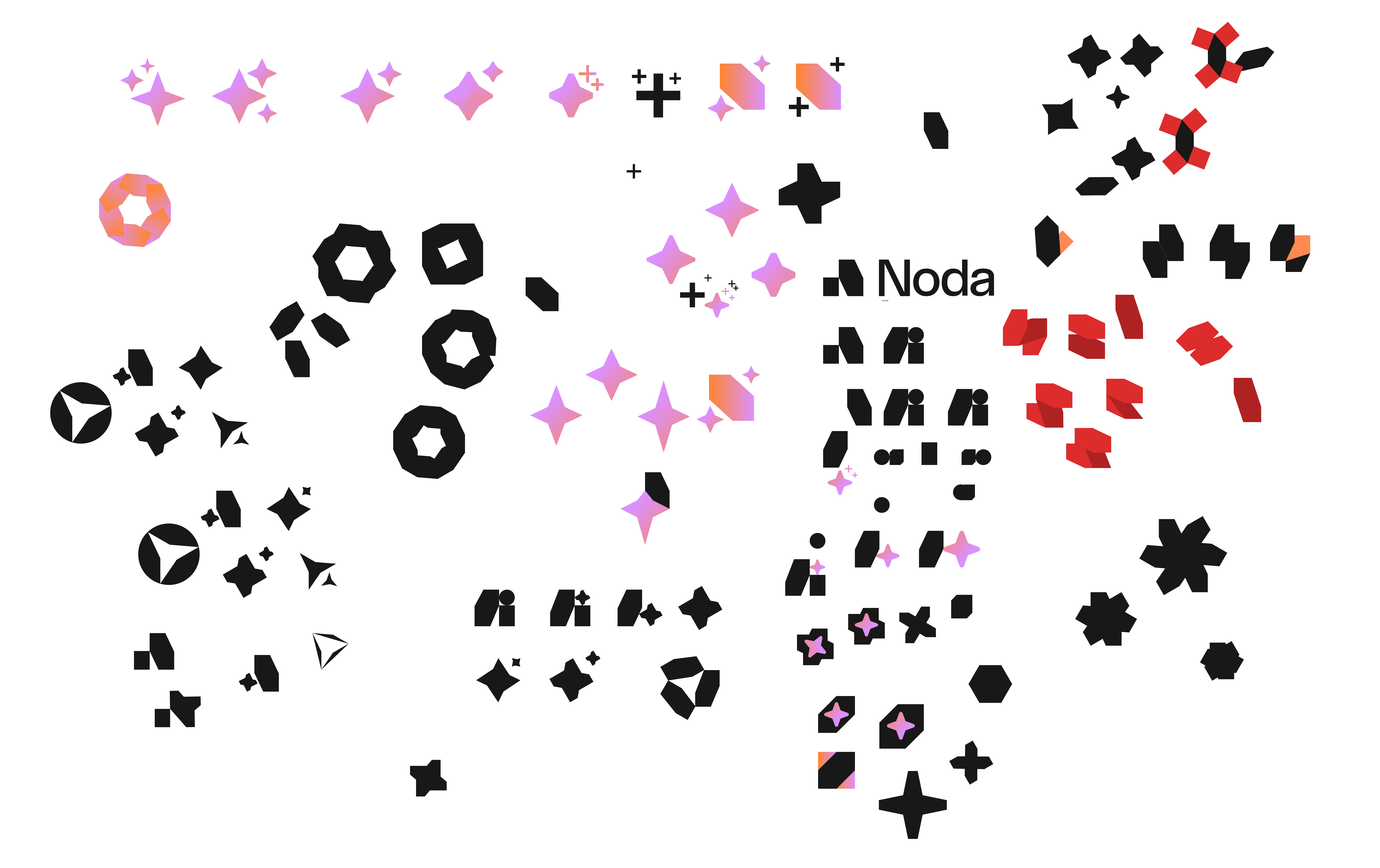
Branding and icon explorations
Establishing AI Principles
To codify our product guardrails, I led a project to define a set of AI principles to be used across all Noda's solutions. These were published as a human focussed microsite and LLM focussed set of instructions.
Key principles for the Noda Assistant:
Persistent
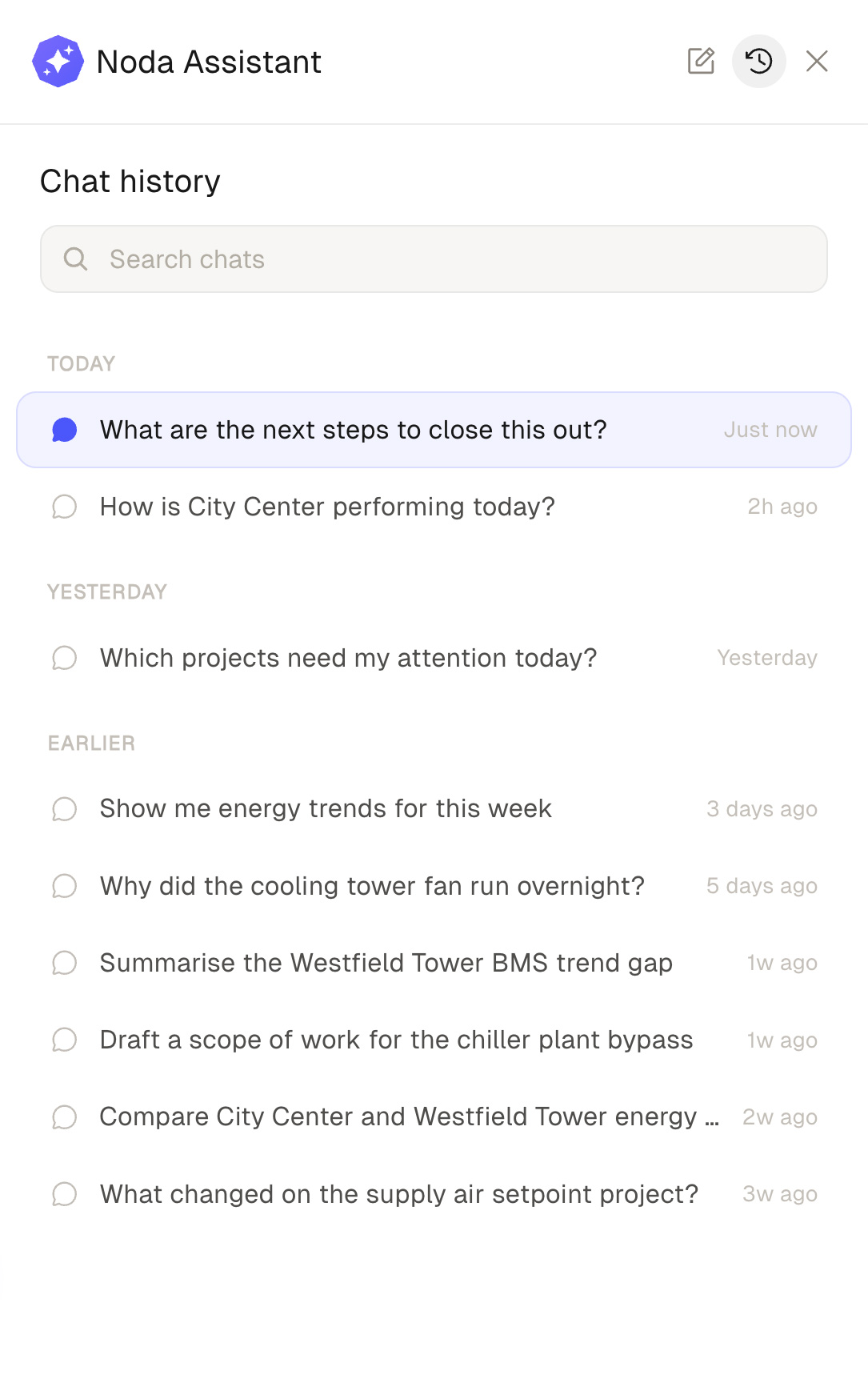
The chat maintains continuous state and context as users navigate across different areas of the platform, eliminating resets.
Co-worker, Not Overlay:
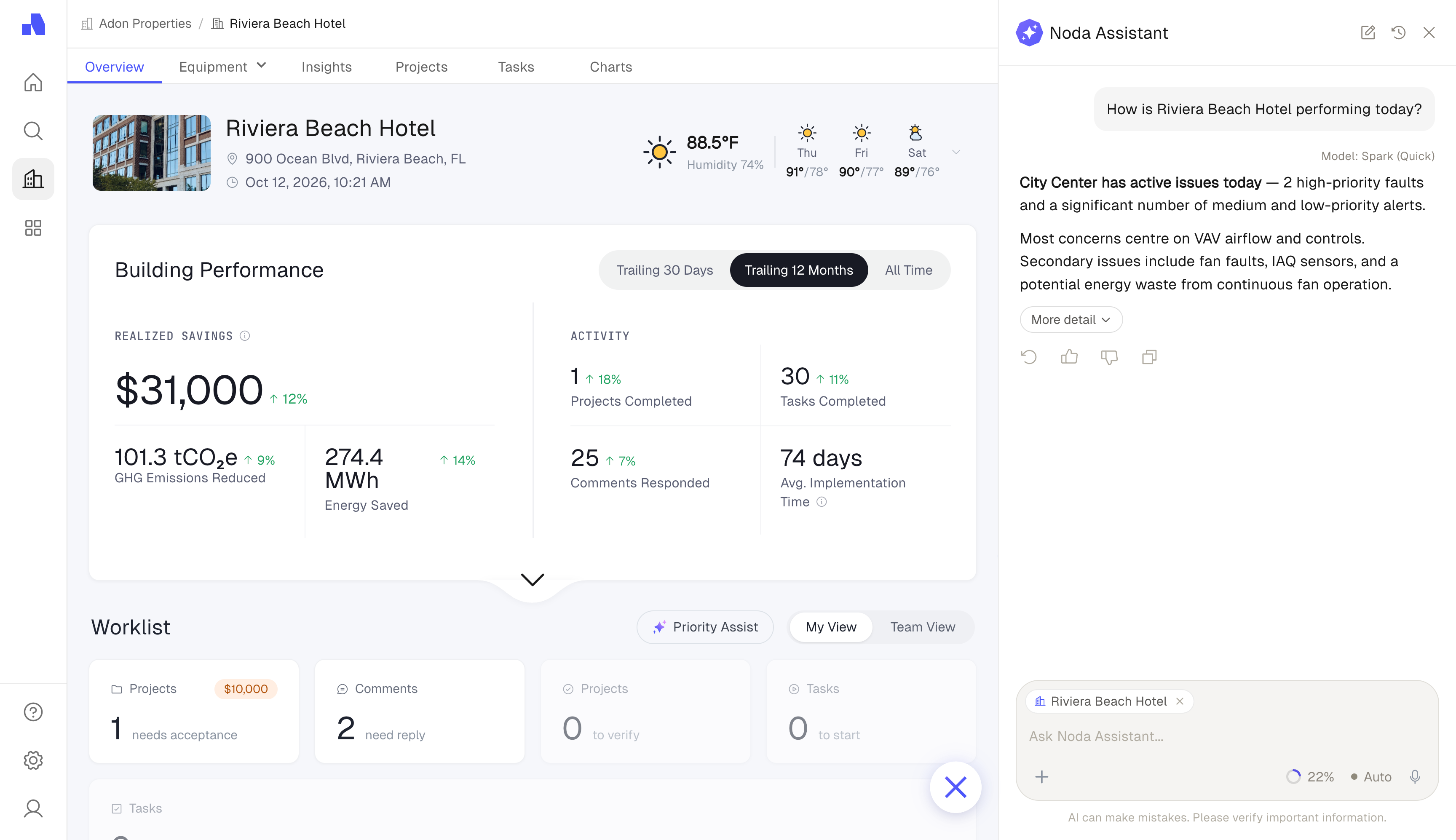
Positioned alongside the workspace not blocking it, users work with the platform and Assistant together.
Bi-Directional
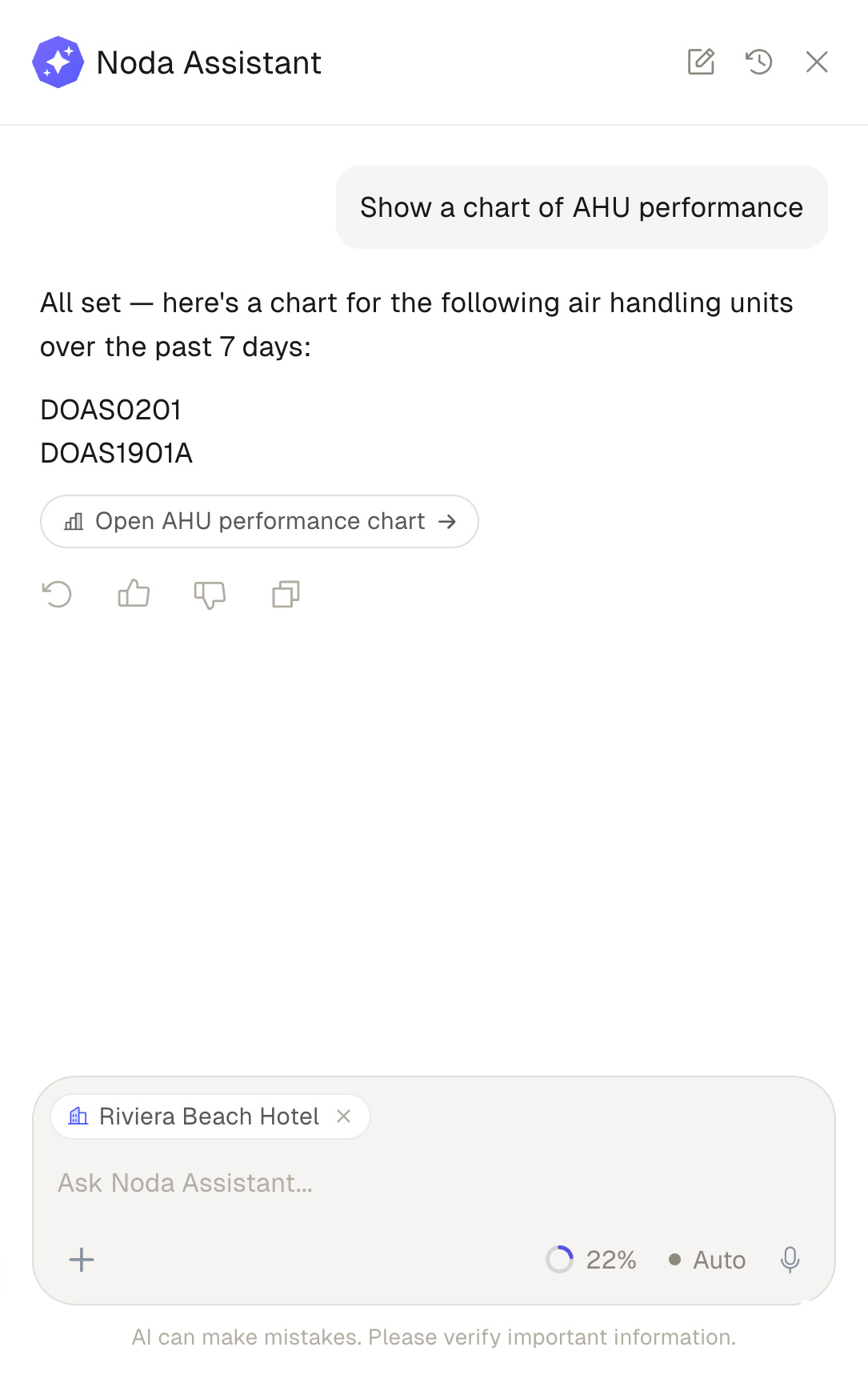
Supporting both inbound context triggers (e.g. "Explain this") and outbound platform agency (e.g. generating a chart via a prompt).
User in Control
Directly addressing user resistance by ensuring the human remains in charge of execution, with transparent reasoning traces.
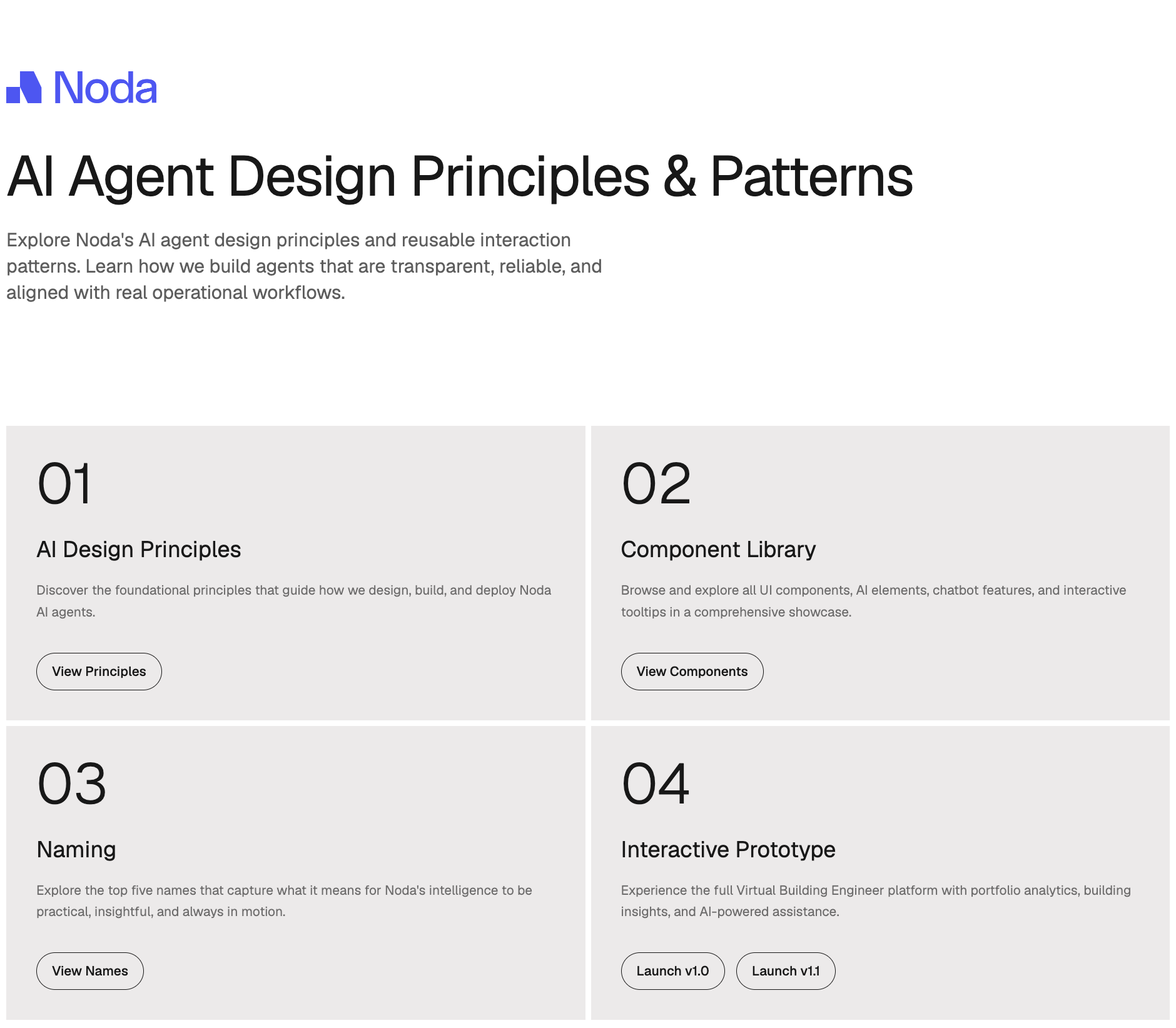
The AI Principles microsite
Prototyping in Code
Moving beyond static mockups, I leveraged Claude Code to build an ambitious, fully functional LLM powered prototype.
The Claude Code prototype
Rapid Iteration
- Rapid Feature Expansion: This coding workflow allowed me to rapidly add many additional features, creating a rich, working vision that could be thoroughly tested.
- Solving Latency & Ergonomics: I shared these functional prototypes directly with the team internal expert users. Early testing revealed latency friction, so I designed and integrated live text streaming and context-aware loading indicators to make response times feel instantaneous and transparent.
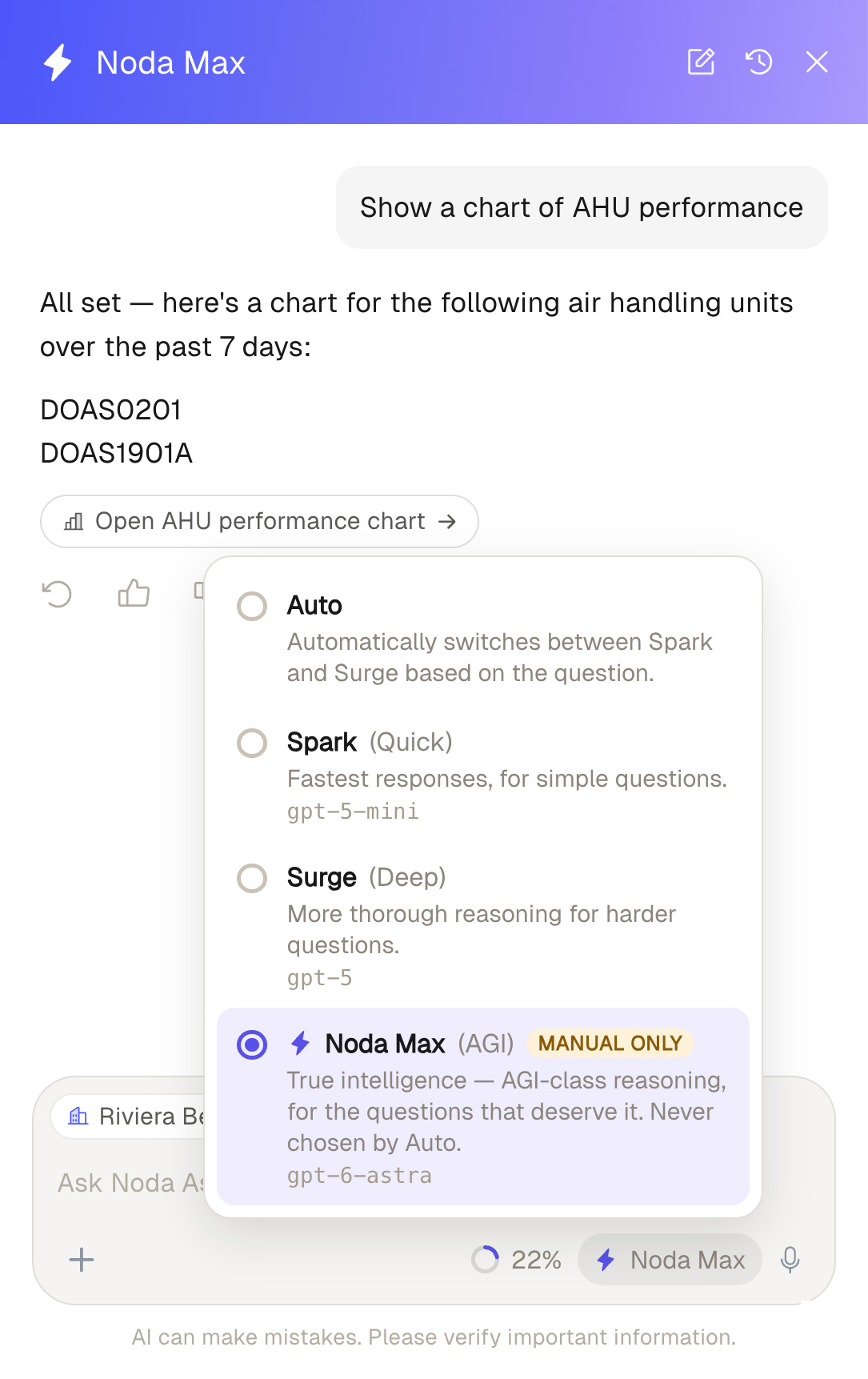
- Scoping to MVP: Prototyping in code allowed the cross-functional team to evaluate a tangible experience, making it easier to test technical feasibility, align on interaction models, and scope the feature down effectively for our MVP release.
Launch & Rollout
Bringing Noda Assistant to market required a synchronized, cross-functional go-to-market execution alongside product management, marketing, and customer success.
- Usage Tracking & Analytics: We implemented comprehensive usage tracking to monitor how frequently the tool was utilized and analyze the specific types of natural-language questions building engineers were asking.
- GTM & Comms Rollout: I collaborated across teams to execute a comprehensive public relations and user communication rollout.
- Education & Onboarding: I partnered closely with PM, marketing, and CS to design and build the interactive product tour and launch video to drive user adoption.
Measuring Success
Validating the Vision: Early tracking, sales feedback, and community response indicate that the product successfully bridges the gap from passive monitoring to active work management - fulfilling our core promise: Less time finding. More time fixing.
Key Takeaways: Building an advanced conversational assistant proved that success relies heavily on transparency, traceable data sourcing, maintaining human control, and leveraging rapid code prototyping to bridge the gap between design and engineering.
Credits
UX
Tom Killeen
Product
Vietnam Mai
Engineering
Paul Loh
Data
Jon Schoenfeld